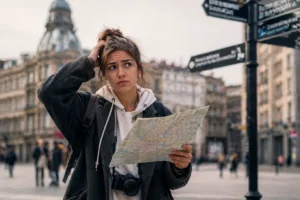
Here’s a version of solo travel that doesn’t always make it into the Instagram highlights: the afternoon when your energy crashes completely, when you’re slightly sick in a foreign country and there’s no one to bring you tea, when the pace you set for yourself turns out to be too much and you’re too tired to enjoy anything.
Solo travel is incredible. It’s also real life, just in a more interesting location. And real life includes the need to take care of yourself.
The irony is that many women who travel solo are leaving behind lives where they take care of everyone else, often at the expense of themselves. The whole point of solo travel, in many ways, is to come home more whole. But that requires actually using the trip to nourish yourself, not just push through it on adrenaline and to-do lists.
This is how you do that.
Listen to Your Energy the Same Way You’d Listen to a Friend
If a friend told you she was exhausted, that she hadn’t slept properly, that she’d been on the go for eight hours straight with no real break, you’d tell her to rest. You’d be gentle with her. You’d say the Uffizi Gallery will still be there tomorrow.
Try to be that friend to yourself.
Solo travel has a tendency to create a kind of feverish productivity because you feel like every day should be maximized. There’s no one to slow you down, no one to suggest a rest, no one to say let’s just get dinner and call it a night. So you keep going until you hit a wall.
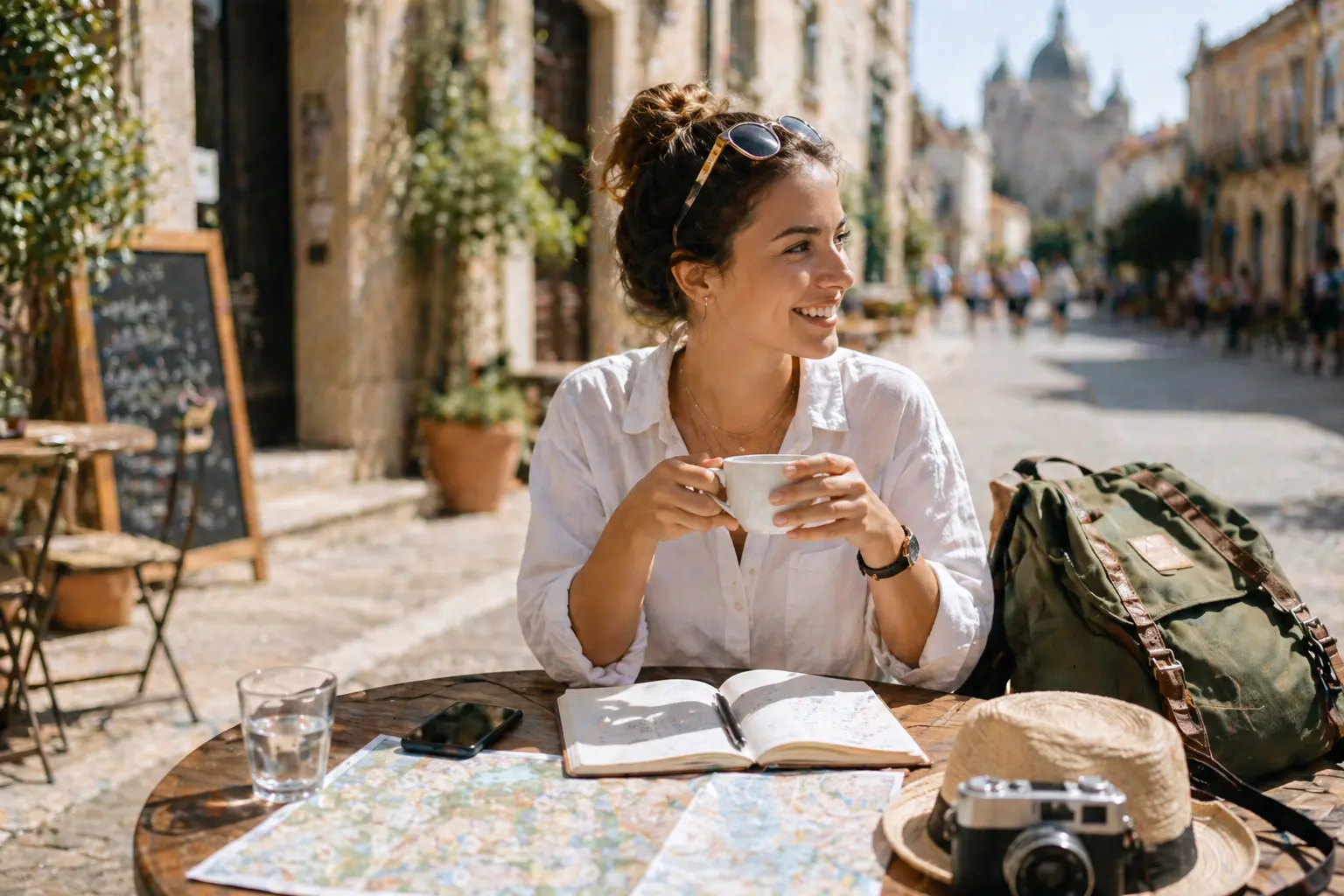
Build rest into your itinerary on purpose. A slow morning where you don’t go anywhere before 11. An afternoon where the plan is just to sit somewhere beautiful with a coffee and a book. A full rest day if you’re traveling for more than a week. These aren’t wasted time. They’re where the experience settles in.
Get Your Sleep
This sounds basic and it is. But it’s also the piece most often sacrificed when we’re excited and somewhere new.
Sleep deprivation compounds quickly on a solo trip. After two or three nights of poor sleep, your mood shifts, your decision-making suffers, and the trip you worked hard to take starts to feel like a chore.
A few things that help: bring a good sleep kit, an eye mask, earplugs, and a small white noise app if you’re a light sleeper. Limit screen time and caffeine in the hours before bed, even if you’re tempted to stay up planning tomorrow. If you’re crossing time zones, try to adjust your sleep schedule to local time as quickly as possible.
Your hotel room is not just where you store your luggage. It’s where you recover. Treat it like that.
Eat Like You Mean It
Solo travel eating can go one of two ways: you either eat wonderfully because you have total freedom to explore exactly what you want, or you slip into convenience-only mode and subsist on airport sandwiches and vending machine snacks because real meals feel like too much effort alone.
Aim for the first one. A proper, sit-down meal, once a day at minimum, does more than nourish your body. It grounds you. It gives your day a rhythm. It puts you in a room with local food and local culture in a way that running between sights never does.
If eating alone in a restaurant still feels awkward, sit at the bar if there is one. Bring a book or a journal. Order something you genuinely want. Pay attention to the food and the room rather than your phone. Eating alone becomes one of the things solo travelers love most about their trips. Give it a fair chance.
Also: stay hydrated. Especially if you’re walking a lot, in warm weather, or adjusting to different food. A small reusable water bottle is one of the most useful things in your bag.
Keep Up With Some Version of Your Movement Routine
You’re probably walking more than you do at home, which counts for a great deal. But if you have a movement practice that matters to you, yoga, running, swimming, stretching, try to maintain some version of it.
This isn’t about discipline or burning calories. It’s about the mental and emotional regulation that physical movement provides. A 20-minute morning run in a new city can completely set your day. A yoga session in your hotel room before you start the day can keep you grounded when everything around you is unfamiliar.
Many hotels have gyms. Many cities have parks. Many destinations have yoga studios that welcome drop-in visitors. A quick search before you arrive can help you find a spot to move.
Check In With How You’re Feeling, Emotionally
This one is the most overlooked and possibly the most important.
Solo travel surfaces things. When you take away the usual distractions of work, relationships, routine, and the perpetual busyness of ordinary life, you’re left with yourself. That can be beautiful. It can also be illuminating in ways that are harder to sit with.
Feelings you haven’t had time to process tend to show up on solo trips. Grief, loneliness, clarity about relationships or work situations, a kind of sadness for time that’s passed or choices that weren’t made. Don’t be alarmed if this happens to you. It’s not a sign that something has gone wrong. It’s a sign that you’ve given yourself enough space to actually hear what’s there.
Journaling helps. Even a few sentences at the end of the day, whatever you’re noticing, whatever you’re feeling, creates a container for the experience and keeps it from accumulating into overwhelm.
If you find yourself feeling persistently anxious or low, it’s okay to adjust the pace of the trip. Take a rest day. Call someone at home. Do something that genuinely soothes you, a long bath, a quiet afternoon reading, a familiar comfort food.
You do not have to perform having the trip of your life every single day. The trip can have quiet days. The trip can have hard days. Both are part of it.
Protect Your Skin and Physical Health
This one is practical but important. Sunscreen every day, even in cities, even in cloudy weather. This is particularly easy to forget when you’re absorbed in sightseeing and covering a lot of ground.
Wear comfortable shoes and don’t underestimate how much you’ll walk. Blisters on day two of a seven-day trip are both preventable and genuinely trip-affecting. Break in any new shoes before you leave home.
Carry a basic health kit: pain relief, antidiarrheal medication (food is adventurous, digestion sometimes protests), plasters, antihistamine. And make sure your travel insurance covers any prescription medications you rely on, so you know how to handle them if you need a refill abroad.
Build Small Rituals
One of the unexpected joys of solo travel is getting to build small rituals entirely around what you love.
The morning coffee at a particular cafe. The habit of writing in your journal before bed. The evening walk to the waterfront. The playlist you listen to while you get ready for the day.
These small rituals create a sense of home within the unfamiliarity. They give your days a thread of continuity and personal meaning that makes the trip feel deeply yours, not just a sequence of tourist activities.
Pay attention to the rituals that emerge naturally. They’re telling you something about what you love.
The Trip That Restores You
Solo travel can be many things: adventure, exploration, discovery, challenge. But at its best, it is also genuinely restorative. A chance to come back to yourself, to hear your own thoughts, to make choices that are entirely and un-apologetically yours.
That restoration doesn’t happen automatically. It requires some intentionality, some willingness to slow down, some commitment to treating yourself on the road the way you’d treat a person you care about.
In The Woman You Meet When You Travel Alone, there’s a whole section on exactly this: how to travel in a way that actually recharges you, how to balance the impulse to see everything with the wisdom of knowing when to rest, and how to come home feeling more like yourself rather than more depleted.
Because the goal of solo travel, ultimately, is not to fill your camera roll. It’s to fill something deeper.