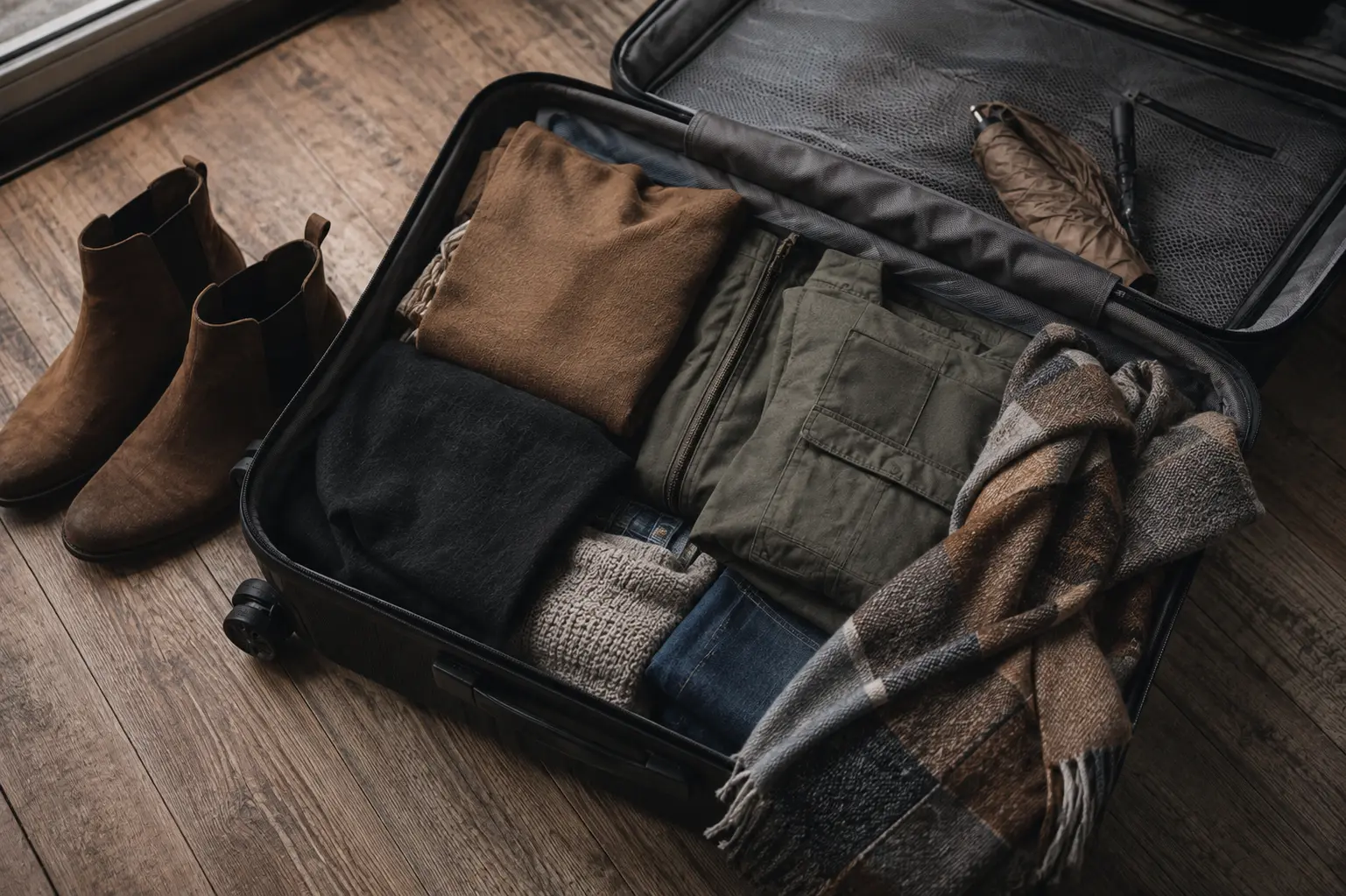
Fall is the one season that’s truly tried to defeat my carry-on packing list. I once landed in Edinburgh at 45°F in dense fog. By 2pm, the sun had come out, and I was sweating in the wool sweater I’d been so smug about packing.
Summer, I’ve got figured out: light fabrics, no layers, done. Fall asks a different question. How do you pack for a day that might be three different temperatures before dinner? After a few trips of getting it wrong, here’s the fall carry-on packing list and system that actually works.
This post contains an affiliate link. If you buy through it, I may earn a small commission at no extra cost to you. It’s one of the ways I keep this blog running. I only recommend things I’d actually use myself.
The bag I currently travel with is the Nomatic Travel Pack. It fits everything on this list and goes straight into the overhead bin. It also has enough structure that I can find things without unpacking everything to reach the bottom.
A note on the link above: it’s an affiliate link, which means I may earn a small commission if you buy through it, at no extra cost to you.
Why Fall Packing Is a Different Game
Summer packing is mostly a volume problem. Everything is small and light, so the only challenge is fitting enough of it in.
Fall is a range problem. You need pieces that handle a cold morning and a warm afternoon, without four separate outfits to do it. The answer isn’t packing more. It’s a fall carry-on packing list built around layers, where each piece does more than one job.
My Fall Carry-On Packing List
Clothing: Built Around Layers, Not Separate Outfits
- 3 long-sleeve tops or fine-knit sweaters, all in colors that coordinate with each other
- 2 short-sleeve or lightweight tops, to layer underneath when it’s colder than planned
- 1 pair of jeans or dark trousers
- 1 pair of comfortable travel pants for the long transit days
- 1 midi skirt or dress that works under a sweater or over tights
- 1 pair of leggings or tights for warmth, or as backup sleepwear
- 1 scarf, doing three jobs: warmth, accessory, and a makeshift pillow on a train
The One Piece I Actually Think Hard About: The Jacket
I pick a single outerwear piece that can do everything. Usually it’s a lightweight trench, or a packable puffer that layers underneath it if it gets properly cold. This is the item I spend the most time deciding on before a trip. Quietly, it does the job that three separate jackets would do in a less thought-out bag.
Shoes: Still Just Three Pairs
Shoes are the other place a fall carry-on packing list can go sideways fast.
- Comfortable, broken-in walking shoes or boots, worn on the plane
- Ankle boots that go from a full day of walking straight into dinner
- One packable, lightweight backup pair, for when the first pair inevitably gets rained on
The Small Stuff That Earns Its Space
- Packing cubes. They’re even more essential in fall, because bulkier layers get chaotic fast without them.
- A compact umbrella or a packable rain shell
- Hand cream and lip balm, because fall air and recycled plane air are both merciless
- A tote that folds flat, for markets, museums, or the layer you’ve shed by 2pm
- Liquids sized and bagged to meet the TSA’s 3-1-1 rule, so security is one less thing to think about
The Fall Layering System That Actually Solved This
Three layers, every time:
- Base: a thin long-sleeve or short-sleeve top
- Mid: a sweater or cardigan
- Outer: the one jacket
On a cold morning, all three go on. By the afternoon, the cardigan is tied around my bag and the jacket is over my arm. Five or six individual pieces cover a much wider temperature range than five or six unrelated outfits ever could. That’s the whole reason this system exists.
What to Wear on the Plane
Your travel-day outfit is part of your packing list, and in fall it does a lot of heavy lifting. Wear your bulkiest pieces: the walking boots, the jacket, and your warmest sweater. They take up the most room in a bag, and planes are often chilly anyway.
Think of it as a free extra layer of luggage space. Once you’re seated, the jacket can double as a blanket, and the scarf becomes a pillow.
How to Pack Bulky Fall Layers in a Carry-On
Sweaters and boots are where a fall carry-on fills up fastest. A few habits keep everything fitting:
- Roll knits, fold structured pieces. Rolling soft sweaters saves space and limits creasing. Trousers and the skirt fold flatter.
- Use the inside of your boots. Socks, tights, and small items fit neatly inside the shoes you’re packing.
- Give each cube one job. One for tops, one for bottoms, one for underwear and socks. You’ll find things faster and repack in minutes.
- Pack heavy items at the bottom, close to your back if you use a travel backpack. The bag carries better and stays balanced.
Color Palette Matters More Than It Sounds
With fewer pieces working harder, I stick to one tight color family: camel, black, olive, plus one accent color. It sounds restrictive until you realize it’s exactly what lets every top pair with every bottom. That’s the entire point.
If you want to build the same idea into your whole wardrobe, I wrote more about it in how to build a minimalist travel wardrobe that works everywhere.
Adjusting Your Fall Packing List to Your Destination
“Fall” means very different things depending on where you’re going. Use the same base list, then tweak one or two items:
- Rainy cities (think Edinburgh or Amsterdam): swap the backup shoes for a waterproof pair, and make the rain shell your outer layer.
- Mild, sunny destinations (think southern Europe in early fall): drop one sweater and add a second lightweight top.
- Colder, outdoorsy trips: add thermal leggings as your base layer and a warm hat. Both pack small.
The rule stays the same: change a piece, don’t add a whole outfit.
The Test I Do Before I Zip the Bag
Same rule every season: lift the bag, no wheels, and carry it up a full flight of stairs. Fall bags sneak up on you in weight, because sweaters and boots weigh much more than tank tops and sandals. If I can’t carry it comfortably on my own, something comes back out. No exceptions, no matter how much I want to keep it.
Check the Forecast, Not the Calendar
Check the actual forecast two to three days before you leave, not the seasonal average. “Fall” can mean 45°F in one city and 75°F in another during the exact same week. The calendar lies; the forecast doesn’t.
That’s really what a good fall carry-on packing list comes down to: fewer pieces, doing more work, ready for whatever the day turns out to be. For the warm-weather version, here’s how I pack 10 days into one carry-on in summer, and for the bigger picture, my guide to packing light for solo travel.
Frequently Asked Questions
Can you really fit 10 days of fall clothes in a carry-on?
Yes, if you pack layers instead of outfits. Around 10 clothing pieces in coordinating colors, plus three pairs of shoes (one worn), cover 10 days. Plan on doing a quick sink wash or one laundry stop midway.
What’s the most important item on a fall packing list?
The jacket. One versatile outer layer, like a trench with a packable puffer underneath, replaces two or three separate coats and saves the most space.
How do I keep a carry-on under the weight limit in fall?
Wear your heaviest items on the plane, especially boots and your jacket. Then check your airline’s carry-on weight limit before you go, since some airlines enforce one.
Are packing cubes worth it for fall travel?
Yes. Bulky sweaters and layers shift around more than summer clothes. Cubes keep them compressed and organized, so you’re not unpacking your whole bag to find one top.
Traveling Alone This Fall?
The trip is about more than the suitcase. Here’s how to make space for self-care along the way.
A good layering system solves the weather problem. It doesn’t solve the part where you land alone in a new city and have to figure out the rest yourself. If you want more support turning solo travel from an idea into something that actually feels doable, emotionally and practically, that’s exactly what the book below walks you through.