I had heard it from almost everyone who’d ever been there: the Azores are magic. For years this small volcanic archipelago in the middle of the Atlantic stayed at the edge of my list. Far away, hard to picture, easy to leave for someday. Then the photos started finding me everywhere, and something in me finally said: enough waiting. This was going to be solo travel Azores style, exactly how I wanted to finally see it for myself.
I called a friend. Would she want to come with me? I barely had to ask twice.
Solo Travel Azores: Mornings Before the Dive
This is what solo travel Azores mornings looked like before a dive: tide charts before coffee, and nothing but open water ahead of us. The boat’s schedule depended entirely on the tide, not on us. Some mornings we left before sunrise, the water still gray and half asleep. Other days we waited until midmorning for the current to settle enough to anchor near a seamount.
Once we were out past the harbor, there was nothing. No coastline, no other boats, just water in every direction until it met the sky. It’s strange to stand on a deck and realize how far you actually are from anywhere familiar. The Azores sit about two hours by plane from mainland Portugal. Out on the open water, that distance felt completely real. I liked it. There was nothing to do out there but wait and watch. I trusted the ocean would show us something worth it.
Three Days Underwater
We spent our first three days diving. I don’t always dive with the same people. Most of the time I show up somewhere new and join whatever group is diving that day. In the next part, I’ll tell you about a viewpoint covered in hydrangeas and a hidden crater lake. Now I know a good, experienced local dive team can hold you just as safely as any familiar face.
The water reminded me of a quieter, more subdued version of the Red Sea. Fewer colors, fewer fish, but a raw kind of beauty in the volcanic rock below. Even the shape of the reef felt different: jagged black volcanic rock instead of coral. It felt more like diving through the bones of the islands than through a garden, a different kind of solo travel Azores dive than I expected before this trip. And then, on the second dive of the very first day, something happened that I still carry with me.
Seamounts Rising From the Deep
Between dives, one of the local instructors explained why the diving here feels so different from anywhere else I’d been. The Azores sit on top of a chain of underwater volcanoes. Some of them rise from the ocean floor to just beneath the surface. These seamounts are what draw so much life to these waters. Visibility regularly reaches more than 30 meters around them. That meant we could watch shapes forming in the blue long before we ever reached them. Groupers hid in the rock crevices. Moray eels watched from the shadows. Schools of barracuda and jacks moved past in loose, shifting clouds. Nothing about it felt like a reef dive back home. It felt like diving around the edge of something much bigger, something still being built underneath us. This is part of what makes solo travel Azores diving so different: it rarely feels like anywhere else.
The Ray That Stopped Me Mid-Breath
I was floating quietly, barely moving, just watching the shapes of the rocks beneath me. Something enormous appeared in the distance, drifting slowly toward me. For a second I wasn’t even sure what I was looking at. Then it registered all at once, and my mouth fell open in surprise, which, underwater, is not a small mistake.
A giant ray passed within a meter of me. I later learned it was a sicklefin devil ray, one of the mobulid rays that gather at these seamounts. Many of them are pregnant females. The Azores is one of the most important places in the whole Atlantic to see them this way. It was massive and unhurried, its tail moving in slow, deliberate waves behind it. It seemed to know exactly how safe it was in its own world. I hung there completely still and watched it disappear back into the blue.
When we surfaced, I couldn’t stop talking about it. My dive buddy had seen it too, drifting past just behind her only seconds after it passed me. For a few minutes we just floated there on the surface, masks pushed up on our foreheads. We tried to describe something that honestly didn’t need describing. Some things you just have to have been there for. That didn’t stop us from trying anyway, the whole ride back to shore. This is the kind of moment solo travel Azores trips keep handing me, the ones I never would have planned for.
I don’t fully know why that moment stayed with me the way it did. Maybe because for those few seconds, I wasn’t thinking about anything else at all. Not plans, not responsibilities, not the version of myself waiting back home. Just that ray, that water, and how alive I felt watching it.
Into São Miguel
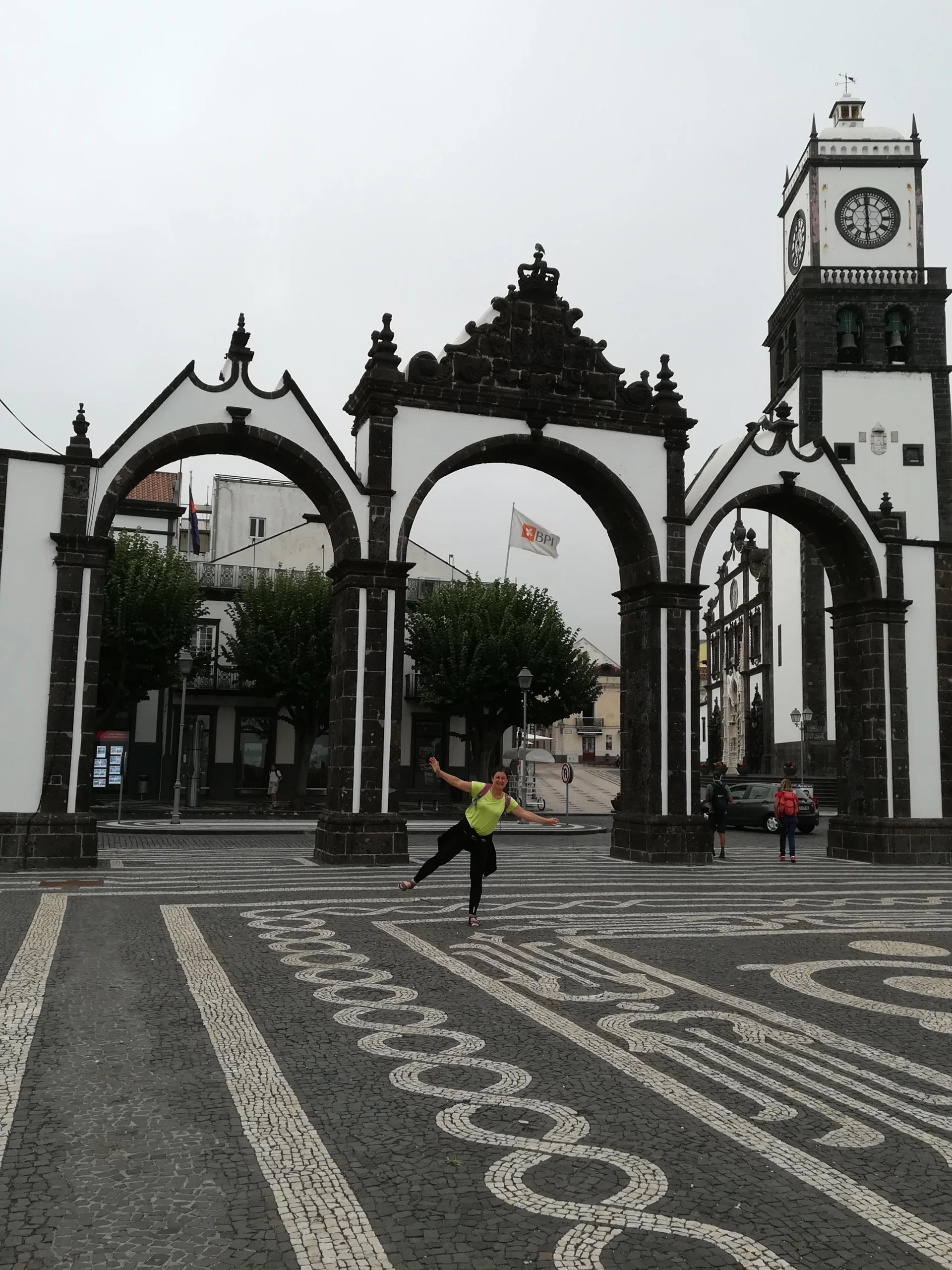
After three days underwater, we picked up our rental car and set off to explore São Miguel. It’s the largest island in the archipelago. In the next part, I’ll tell you about a viewpoint covered in hydrangeas and a hidden crater lake. I’ll also tell you about a day that pushed my body harder than I expected. It ended with 37,217 steps, most of them in sandals. This is solo travel Azores at its best: one adventure leading straight into the next.
What Solo Travel Azores Taught Me
Looking back, I think that’s part of what solo travel keeps giving me. These small, unplanned moments where the noise quiets down remind me, clearly, that I’m still someone who feels things deeply. That’s solo travel Azores style, really: no perfect plan, no dive buddy waiting at home. Just showing up when something calls you.
If you’re standing where I once stood, wondering whether you’re allowed to want this kind of life again, the book below was written to walk beside you while you find out.