The next day took us toward Sete Cidades, but first, a stop at a tea plantation. This small archipelago is home to the only tea grown in Europe, which alone makes it worth a visit. Chá Porto Formoso is a working tea factory with a small museum tracing the islands’ tea-growing history. The tasting at the end is a quiet, lovely way to spend an hour. We sat at a worn wooden table with a view over the plantation, trying a few different leaves one after another. Nobody rushed us out once the cups were empty.
Afterward we visited the Gorreana plantation, which turned out to be even more memorable. We walked for a long time between neat rows of tea bushes. The green hillside rolled all the way to the ocean in the distance. There was almost nobody else around that morning. Just the sound of our own footsteps on the gravel path, and somewhere further down the hill, the low hum of the processing machines still running the way they have for generations. It is strange to stand in the middle of a field in the Atlantic and realize you are looking at the only tea grown anywhere on the continent. Somehow that fact makes the ordinary act of walking through it feel a little more significant.
A Hot Spring in the Rainforest
On the way, we stopped at Caldeira Velha, a hot spring tucked into the middle of a rainforest park. It felt like paradise: birdsong overhead, moving from one pool to the next, feeling something close to weightless. We let ourselves sit in three pools of different temperatures and simply stopped doing anything else for a while. The water carried that faint mineral smell you get used to quickly in the Azores. A small waterfall fed the warmest pool from somewhere higher up in the ferns. Nobody around us seemed to be in a hurry either. For the better part of an hour, none of us checked a phone or talked about what came next, not even the long drive toward Sete Cidades still waiting for us the following day.
The Drive Toward Sete Cidades
The following day we’d planned a longer loop around the island’s western side. The rain came back, thick enough that I could barely see the road ahead. By then we’d learned that on these islands, the weather can turn completely in five minutes. So we kept going anyway. The clouds sat so low along the ridge that entire sections of pasture seemed to disappear and reappear as we climbed. More than once we pulled over just to let a particularly heavy burst pass before continuing. It was the kind of drive that would have felt stressful anywhere else. On São Miguel, though, it already felt like part of the story we would tell later.
Sete Cidades: The Lake With Two Colors
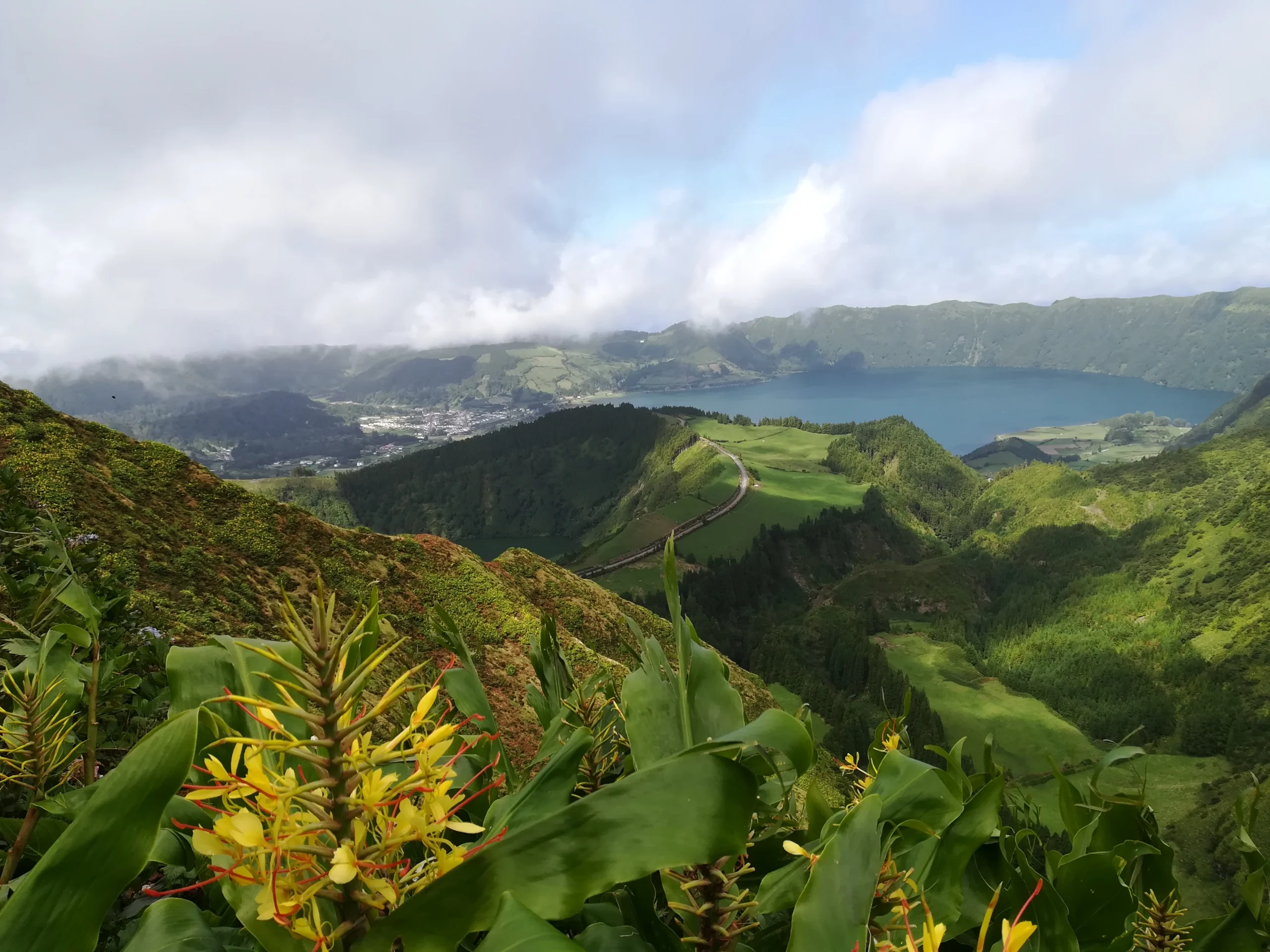
We were heading toward Sete Cidades, one of the true gems of the Azores. The small town sits inside a massive volcanic crater, between Lagoa Azul and Lagoa Verde. The two lakes are separated by nothing more than a narrow strip of land. Each one is a different shade, blue and green, depending on the minerals and the light. The view from the top was the kind that stops you mid-sentence. We stood at the lookout for a long time, not really talking. We just watched the clouds drift across the crater and change the color of the water beneath us by the minute.
Eventually we drove down into the crater itself, past small farms and quiet pastures. We reached the town sitting right between the two lakes. It felt like a different world down there, almost completely closed off from the rest of the island. It had its own small church square and a pace of life that seemed to move slower than anywhere else we’d been. It’s the image most people picture when they think of the Azores. It’s exactly what first pulled me toward Sete Cidades, and this trip, in the first place.
What This Trip Taught Me
The Azores, and that crater town of Sete Cidades most of all, turned out to be one of the most unforgettable trips I’ve taken. I’d recommend it to anyone, traveling with a friend, a partner, or completely on their own.
Planning it ourselves, renting a car, figuring it out as we went, cost a fraction of what an organized tour would have. But the bigger gift was something else: we got to slow down exactly where we wanted. We could move on the moment we were ready. Nobody was waiting for us at a meeting point. No itinerary told us we only had twenty minutes at the crater lookout before moving on to the next stop.
Booking the flights, finding the right places to stay, piecing the days together, I actually love that part of traveling. It’s almost as much fun as the trip itself. Some days didn’t go as planned, like the hike to Lagoa do Fogo or the storm at the viewpoint. But every time that happened, it didn’t feel like something going wrong. It felt like the trip finding its own way to surprise me. By the end of the week, I’d stopped expecting things to go exactly as planned, and started looking forward to whatever the weather or the road decided to throw at us next.
If some part of you has been quietly waiting for permission to plan a trip like this for yourself, messy weather, wrong turns, and all, this is your sign. The book below is here to help you take that first step.