Zanzibar is often called the Spice Island, and once you visit a Zanzibar spice farm, you understand why. Spices have shaped the island’s economy for centuries. Nearly every local guide has a favorite farm they work with and bring visitors to. We went with my son, my colleague, and her daughter, four of us in total. What started as a simple walk through some plants turned into one of our favorite memories from the whole trip.
How Zanzibar Became a Global Spice Capital
The nickname isn’t just a tourism slogan. In 1832, the Sultan of Oman moved his capital from Muscat to Zanzibar. He introduced large-scale clove farming soon after. The volcanic soil and warm climate turned out to be perfect for it. By the mid-1800s, Zanzibar was producing roughly 80 percent of the world’s cloves. The trade drew merchants from India, Arabia, and Europe straight to its ports. That history is exactly why people still call it the Spice Island. It’s also why a Zanzibar spice farm tour today still walks you through cloves, nutmeg, cinnamon, vanilla, turmeric, ginger, cardamom, and black pepper. These are the same crops that built the island’s economy generations ago. Clove production has slowed since then, but spice farming never disappeared. Today, it survives largely through small family farms and the tours built around them. That’s exactly the kind of farm we visited.
What a Zanzibar Spice Farm Tour Actually Looks Like
The moment we stepped onto the farm, it felt like walking into a forest rather than a field. Everything was dense, green, and a little wild, with plants growing in every direction.
The first plant our guide showed us was a chili bush. My son loves chili. Before anyone could stop him, he picked one and bit straight into it. Our guide’s eyes went wide. He clearly expected some kind of reaction, maybe coughing, maybe tears. My son just shrugged it off. It barely registered for him.
The Spices We Saw and Tasted
From there, the tour kept surprising us. Our guide showed us lemongrass, cardamom, and cloves growing right on the plant. This Zanzibar spice farm grows all of it long before any of it ever ends up in a spice jar. We learned that cinnamon actually comes from the bark of a specific tree. None of us had really thought about that before. Our guide handed us a nutmeg to hold. Honestly, none of us recognized what it was until he told us. We tasted fresh cardamom too, a completely different experience from the dried version most of us grew up with.
Then we saw how vanilla actually grows: as a pod on a climbing vine. That’s not something you’d expect if you only know vanilla from a bottle. We also tried fresh banana and mango straight from the farm. Both were sweeter and more intense than anything from a supermarket back home.
A Flower Headpiece, Woven Right There on the Farm
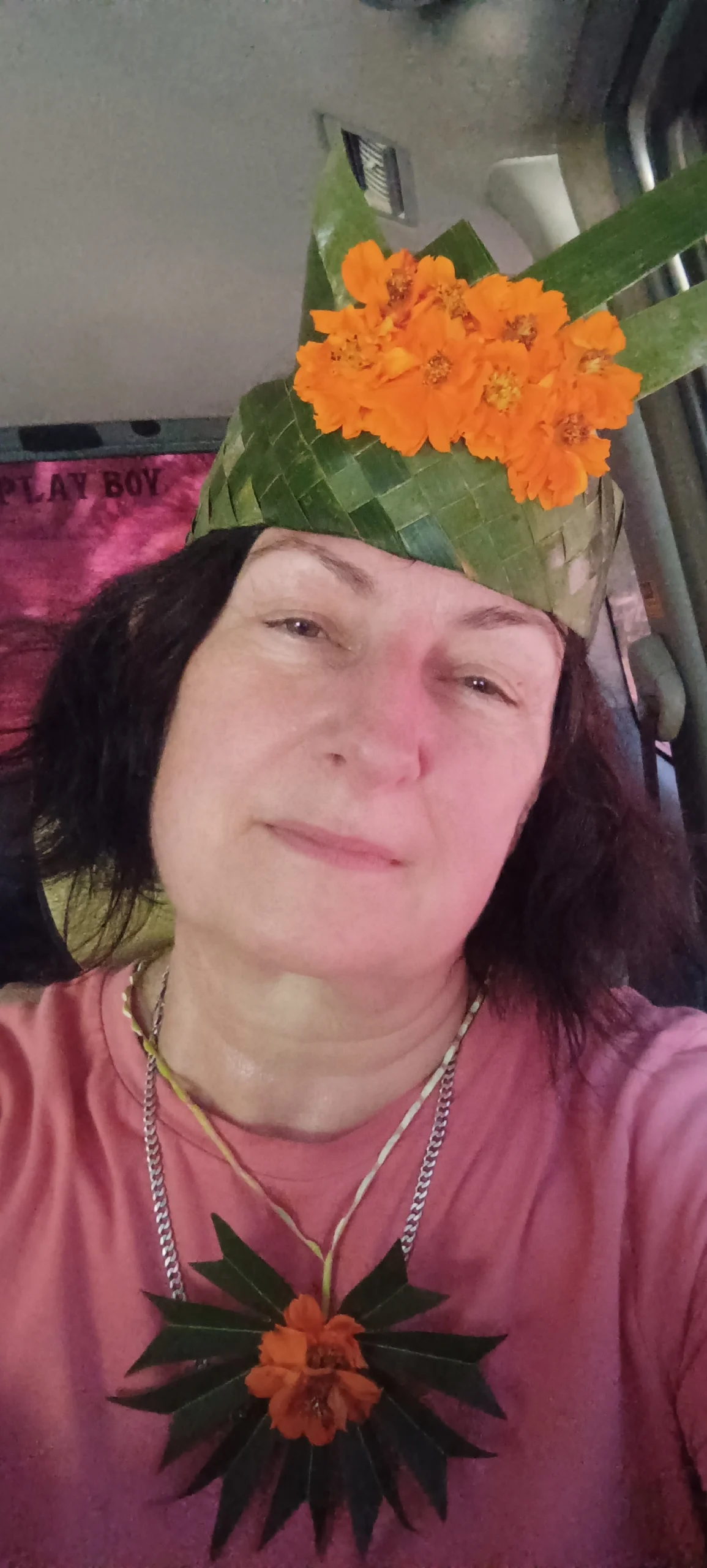
We were busy studying the plants. Meanwhile, one of the local men on this Zanzibar spice farm quietly got to work with his hands. By the time we noticed, he had already woven a small flower headpiece for me and one for my colleague. He used nothing but flowers and leaves picked around us. For my son, he made a woven tie from the same materials. No tools, no preparation, just quick, skilled hands turning what was growing around us into something we could wear.
What to Know Before You Book a Zanzibar Spice Tour
Most spice farms sit inland. Plan for a short taxi or tuk-tuk ride from Stone Town or the beach resorts, usually 20 to 40 minutes depending on where you’re staying. Tours typically run two to three hours. Most end with the chance to buy spices, vanilla pods, or small souvenirs directly from the farm, which puts money straight into the local community instead of a shop in town. Wear shoes you don’t mind getting a little muddy, since the paths between plants aren’t paved. If you can, ask your guesthouse or guide to recommend a smaller, family-run farm. Skip the larger tour-bus stops when you have the choice. The tour we did felt personal precisely because it wasn’t crowded, and that’s worth asking for by name.
Buying spices directly from the farm felt like a nice way to close out our own visit. It was a much calmer detour than our airport transfer ended up being. If you ever get the chance to visit a Zanzibar spice farm yourself, take it. It’s a small detour that ends up staying with you longer than you’d expect.
It was a good day: simple, a little unexpected. It’s the kind of experience that reminds you why slowing down on a trip is worth it.
Days like this are part of why I keep traveling. Sometimes it’s with people I love, sometimes completely on my own. If you’ve been feeling that pull for more of these moments, the book below can help. Even one trip that feels entirely your own is worth chasing. The Woman You Meet When You Travel Alone walks you through getting there. It starts with that first “I want more than this” feeling and ends with actually booking the ticket.